.svg)
Waiting until closer to the 2027 deadline can actually reduce risk for some businesses. Early adopters often face unstable systems and migration issues that later movers can avoid.
Picture your phones going dead the morning the PSTN switch-off finally lands: calls won't connect, card readers won't authorise, and the alarm panel can't get a line out. That's the risk sitting in front of any business that isn't ready once the old network switches off for good.
These aren't small inconveniences, either — losing phone connectivity, payment processing or a route to emergency services can stop a working day cold and cost real money while it's happening. With the deadline for the ISDN switch-off fixed for 2027, the calendar pressure is genuine, and plenty of businesses are being told to move now rather than later.
We'd push back a little on that, though — or at least ask you to slow down and think it through with us. Rushing into a digital phone upgrade before the market has settled can land you in the middle of teething problems that the earliest movers tend to absorb.
Underneath all of this is a straightforward shift: the public switched telephone network is being retired, and analogue landlines and ISDN services are being replaced by digital voice systems. The destination is a fully digital phone network — we just don't think everyone needs to arrive there on the same day.

Early migration: Why the rush may not pay off
There's a lot of noise telling businesses to switch to digital phone lines as fast as possible, and we understand why — providers, vendors, and the trade press all have reasons to push urgency. Even so, we'd say switching early isn't automatically the safest option, and it's worth saying that plainly before anyone commits to a date.
Move before most of the market does, and you can end up testing the technology rather than using it. Early SIP trunking setups can be a bit shaky; providers are sometimes still smoothing out their own migration processes, and the practical result is more downtime, surprise costs, or a feature that just doesn't behave the way it was described.
For businesses with anything beyond the simplest telephony, waiting gives providers time to catch their own rough edges before you rely on them. As more companies make the move, the tooling and the support around it both improve — so you get the benefit of other people's early frustrations without carrying them yourself.
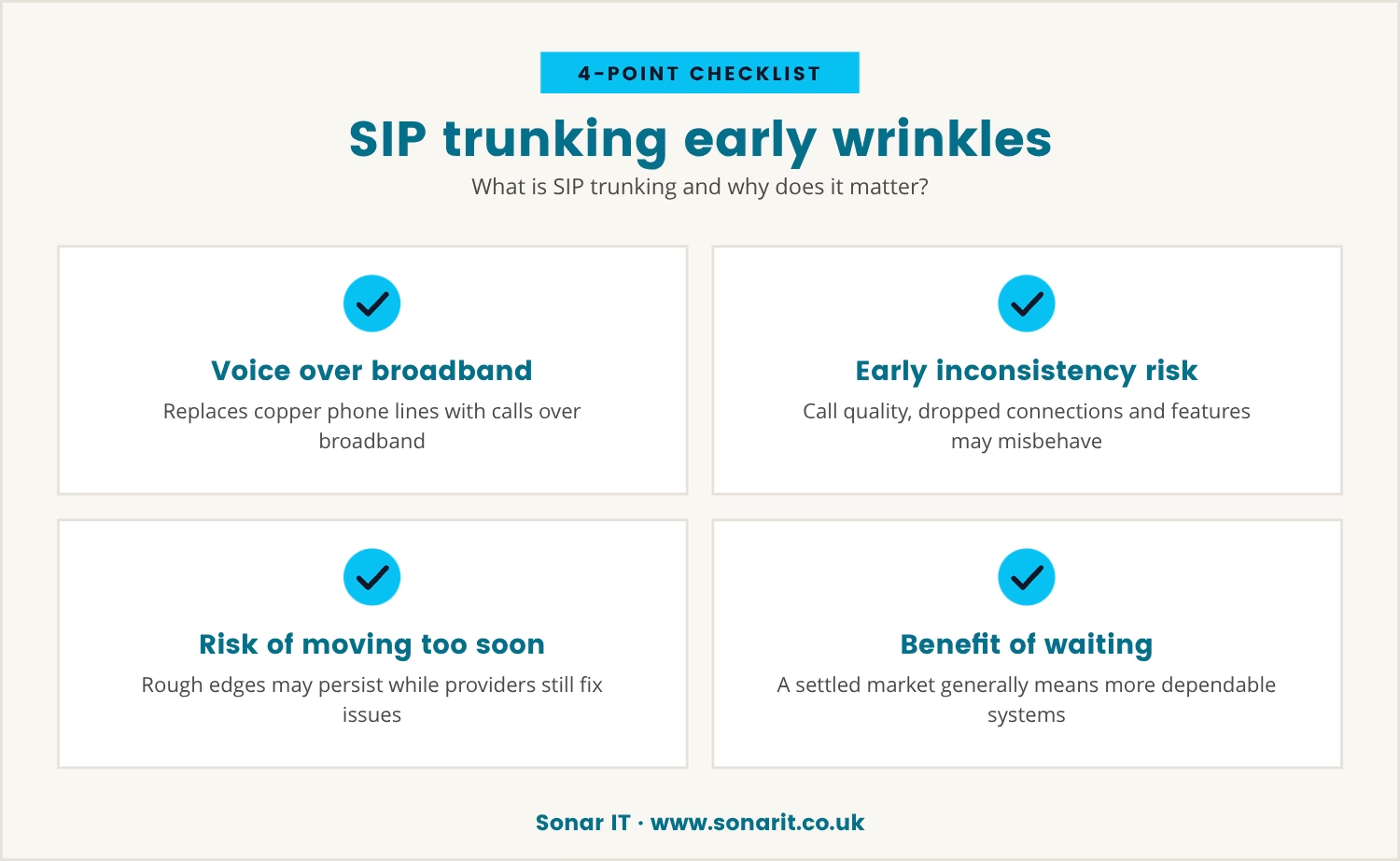
What is SIP trunking and why does it matter?
SIP trunking is, in plain terms, the technology that most businesses will end up using instead of their old phone lines — it sends voice calls over your broadband connection rather than down copper wire. It's central to how the PSTN switch-off actually plays out for most offices, and it comes with its own set of early-days wrinkles.
In the early stages, some SIP trunking setups can be a little inconsistent: call quality dips, connections drop, and features you've come to depend on — call forwarding, voicemail, tying into your existing phone system — don't always work the way the brochure promised.
Move too soon, and you may end up living with those rough edges while the provider is still fixing them in the background. Wait a bit, and the market has more room to settle, which generally means more mature, more dependable systems to pick from.
The PSTN switch-off in London: Local context for your decision
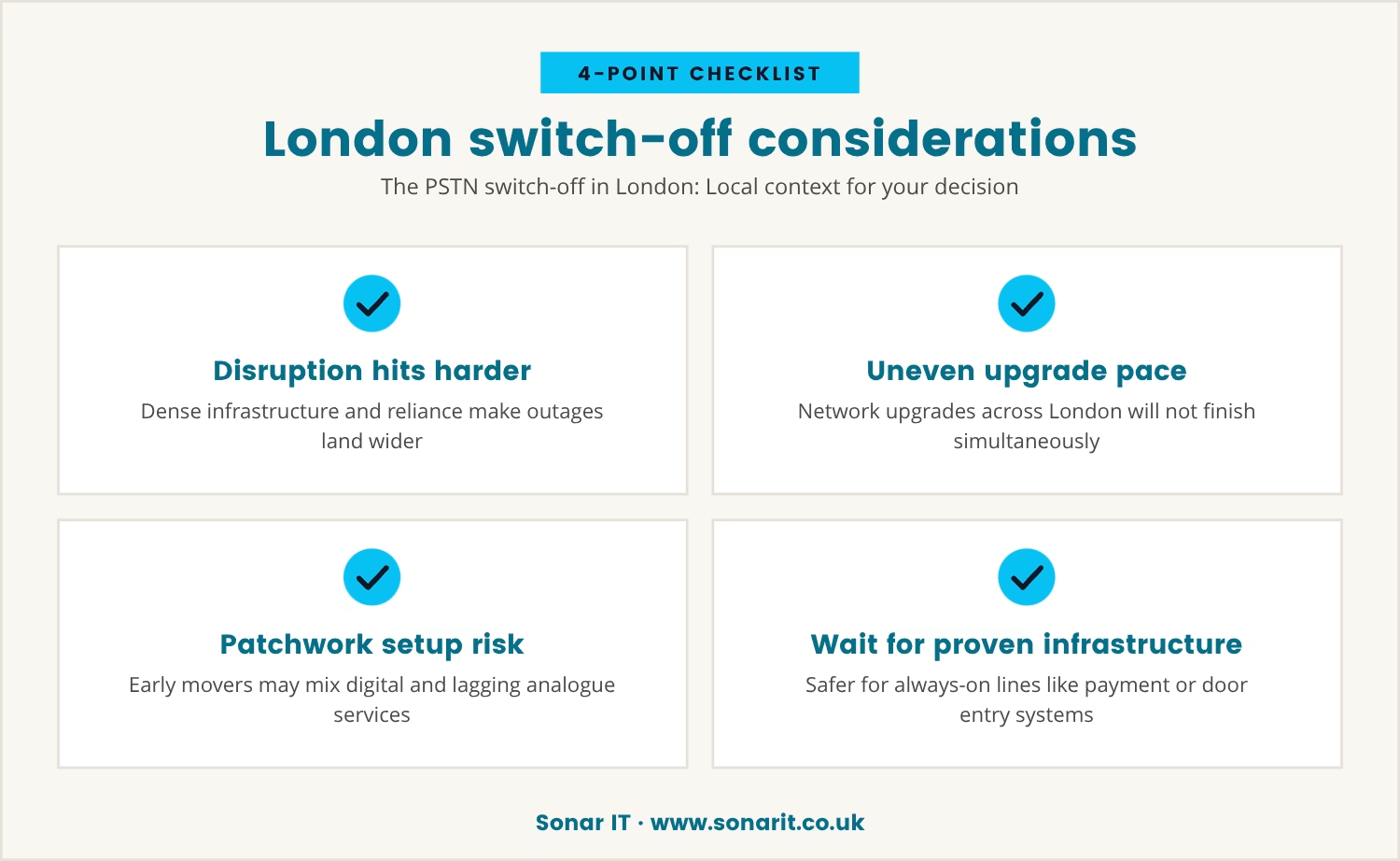
London businesses carry a slightly different version of this pressure. The density of the city's infrastructure, paired with how much everyone there depends on reliable connectivity, means a disruption tends to land harder and wider than it might elsewhere.
Providers are working to upgrade networks across London at pace, but a job that size doesn't land everywhere on the same day. Move early and you may find yourself in a patchwork setup — some of your services digital, others still waiting on analogue infrastructure that hasn't caught up yet.
If your business leans on secure, always-on phone lines — payment terminals or door entry systems are the obvious examples — we think waiting until the local infrastructure has proven itself is, more often than not, the steadier choice. It keeps you out of the middle of upgrades that are still in progress around you.
How early adoption can expose your business: Key risks and realities
Early migration gets sold as a way to get ahead of the deadline, but in practice it can bring its own set of headaches. Here's roughly what moving too soon tends to look like in the real world.
Immature SIP configurations
Providers are sometimes still refining their own SIP trunking setups, and that can throw up compatibility issues with whatever hardware you're already running. It's less a dealbreaker than a reason to ask hard questions before you sign anything.
Feature gaps
Some early digital phone solutions are missing things you rely on day to day — advanced call routing, say, or integration with older legacy hardware. Worth checking the feature list against your actual workflow rather than the sales sheet.
Support bottlenecks
When only a handful of businesses have made the move, the support teams on the other end of the phone haven't necessarily seen your particular problem before. That inexperience can turn a small issue into a longer wait than it should be.
Higher costs
Early adopters sometimes end up paying more for installation or upgrades, since providers are still passing on the cost of building out new infrastructure. That cost tends to come down as more businesses migrate and the process becomes routine.
Unpredictable downtime
Switching before the process has been properly streamlined can mean more service interruptions than you'd expect. For a business that can't afford a quiet patch of outage, that's a real consideration.
Security uncertainties
New digital systems don't always have security measures that have been tested under real pressure yet. Sensitive communications are the last place you want to be the one finding out where the gaps are.
Weighing the benefits: What you gain by waiting
Holding off until closer to the 2027 PSTN switch-off deadline has some genuine upsides, we think, even if it isn't the fashionable advice. As the market matures, providers iron out their early mistakes, and you end up with more options rather than fewer.
By waiting, you tend to get:
- Proven reliability: systems that have been tested and improved on the back of other people's early feedback.
- Wider compatibility: more devices and services working cleanly with digital phone lines out of the box.
- Clearer pricing: costs that settle down as competition increases and providers standardise what they offer.
- Better support: teams who've seen the common problems before and can resolve them faster.
- Smoother transitions: migration processes that have had time to become less disruptive.
- Informed decisions: the chance to learn from other people's early missteps instead of supplying your own.
Planning your upgrade: What to consider before making the switch
If you're weighing up when to move your phone systems, a few questions are worth answering first. Start with what's actually running on analogue lines right now — alarms and telecare devices are the ones people forget about until they stop working.
From there, ask your provider directly about their digital upgrade timeline: do they have a migration process they've actually proven, and is their SIP trunking solution genuinely compatible with what you've already got? If you're in London, it's worth asking around — are other businesses near you already running digital voice without issues, or is the infrastructure still catching up?
Last question, and probably the most important one: how much disruption could your business actually absorb? Would a short outage barely register, or would it bring the day to a stop? Your honest answer to that is what should set your timing, more than the deadline itself.
Revisiting the deadline: Why waiting can be the safer move
As the 2027 PSTN switch-off approaches, the pressure to act will only increase. But for many businesses, especially those with 15 to 40 endpoints, holding off can actually reduce risk. Early adopters help providers iron out migration issues, making the process smoother for those who wait.
By planning carefully and keeping an eye on how digital telephony solutions mature, you can sidestep a lot of unnecessary hassle and make the switch on your own timeline. The safest route isn't always the fastest one — it's the one that actually fits your business's needs and timing.

How Sonar IT supports your timing and transition
Many businesses with 15 to 40 endpoints are weighing when to move to digital phone lines, and Sonar IT understands the pressure to get this right. We know that acting too early can bring its own risks, and that careful planning matters.
If you want to see how we approach digital upgrades or want to talk through your own setup, our team is ready to help you find the timing and solution that fits your business best.
Want a risk-free start to your digital upgrade?
Get your first 30 days free and a £3,000 satisfaction guarantee when you switch your business phone systems with us—no hidden conditions, just a straightforward offer for qualifying businesses.
[.c-button-wrap2][.c-button-main2]Start your free 30 days[.c-button-main2][.c-button-wrap2]
Frequently asked questions
How will the PSTN switch-off affect my alarm systems?
Many alarm systems rely on analogue phone lines to reach their monitoring centre, and once the public switched telephone network is retired, those connections can simply stop working unless they're upgraded. Check with your alarm provider now to see whether your equipment is already compatible with digital lines or whether it needs replacing.
Do I need to change my broadband service for digital phone lines?
Digital telephony generally needs a stable broadband connection, since calls travel over the internet rather than copper wire. If your current broadband is slow or unreliable, upgrading it is usually necessary to keep call quality clear and consistent.
What happens to payment terminals after the switch-off?
Some payment terminals still depend on analogue phone lines to process transactions, and those can stop functioning once the PSTN switch-off takes effect unless they're updated to use broadband or mobile connectivity instead. It's worth confirming directly with your payment provider that your terminals are ready for the change.
Can I keep my existing phone numbers after upgrading?
In most cases, yes — your existing business phone numbers can be transferred across to a digital voice service. It's still worth confirming this with your provider before the migration starts, rather than assuming it'll happen automatically.
Will emergency services still work with digital phone lines?
Yes, digital phone lines are built to support emergency calls. That said, it's worth making sure your setup is configured properly, particularly if you've got telecare systems or door entry devices that need to reach emergency services, and testing those functions after the upgrade rather than assuming they'll just work.




%20(1)%20(1).avif)


