.svg)
A SIEM system is only effective when it is configured with correlation rules and tuned alerts on top of basic log collection. Without this tuning, the software cannot reliably identify real threats, leaving businesses exposed despite their investment.
Picture a mid-sized office where the dashboards tick along quietly for weeks, nobody's especially worried, until someone finally stops and asks what is SIEM actually doing in that setup — and realises nobody's touched it since the day it went in. That gap is what this article is about.
A SIEM tool collects and stores security data from across your network, and that's really only the starting point. Left unconfigured, it won't help your team spot a real threat or move fast once something's gone wrong.
The real work — and, we'd argue, the real protection — only starts once you add correlation rules and tune the alerts to your own environment. That's the bit that turns a SIEM system from a log store into something that actually helps you catch and respond to attacks.

Why raw log collection alone is not enough
Plenty of businesses install a SIEM solution and expect instant results: the software starts pulling logs from servers, firewalls, everything, and on paper that looks like a full security information and event management platform is already running.
Collecting logs, though, is only step one. Most of what comes in is routine noise — successful logins, system updates, ordinary traffic — and left unprocessed, your team is staring at a flood of data with no real sense of direction.
That's where the gap shows up. If the SIEM tool isn't set up to filter the noise and flag what's genuinely suspicious, it won't help you respond to anything; it'll store every event faithfully and tell you nothing about which ones actually matter.
So a SIEM system has to do more than store data — it has to help you make sense of it, or the attacks you were hoping to catch slip straight through.
The role of correlation rules in threat detection and response
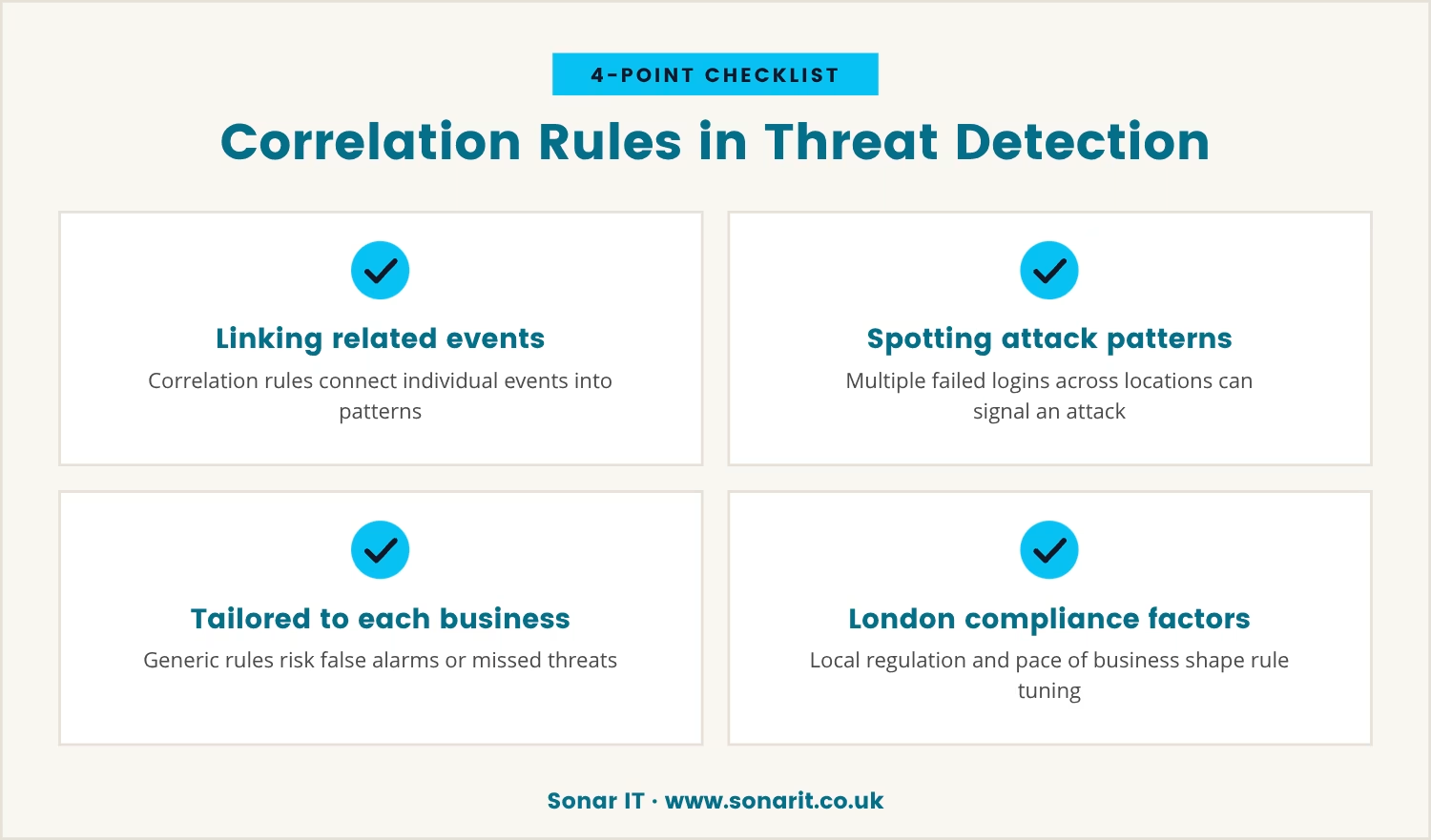
Once the SIEM is actually collecting logs, the next job is building correlation rules — the logic that tells the system how to connect one event to another.
A single failed login on its own usually isn't a problem. Dozens of failed logins from different locations inside a few minutes, though, is the kind of pattern a correlation rule can flag as a likely attack, and that's roughly where threat detection and response starts to mean something.
These rules aren't one-size-fits-all, and we don't think they ever really can be. Every business has its own network, its own users, its own risk profile, so the rules need tailoring — get that wrong, and you're either drowning in false alarms or missing the real thing entirely.
In London, where the regulatory picture and the pace of business can differ sharply from other regions, that tuning matters even more. A rule built for one company often doesn't suit the next, especially once local compliance requirements come into play.
What is SIEM?
A SIEM, or security information and event management system, is a platform that pulls together, stores and analyses security data from right across your IT environment, giving your team one place to watch for trouble.
The real power, though, sits in how it processes and interprets that data — collecting logs alone doesn't make a SIEM effective. The platform needs rules and alerts configured around your business's actual risks and systems before it earns its keep.
Modern SIEM technologies often bring automation and integration with other security tools, which is genuinely useful, but those features still depend on correct setup underneath. Without the right rules in place, even the most capable SIEM software won't deliver much real protection.
How alert tuning turns a SIEM system into something useful
Alert tuning is where a SIEM system earns its keep day to day, and each adjustment below shapes how useful it ends up being.
Reducing false positives
Leave the alerts untuned and your team can end up fielding hundreds of notifications for entirely harmless events. Tuning cuts that noise down so the real threats actually stand out.
Prioritising critical incidents
Not every security event carries the same weight. Custom alert settings let you focus on the incidents that could do real damage, instead of burning hours on minor ones.
Adapting to your environment
Every business runs its own systems and workflows, and tuning is what makes the alerts fit yours. Get that right, and the SIEM tool stops flagging your normal, everyday operations as threats.
Improving response times
Fewer, more accurate alerts mean your security team can move faster once something's genuinely wrong. That speed is often the difference between containing a threat and cleaning up after one.
Supporting compliance
Plenty of regulations expect prompt detection and response to security issues. Well-tuned alerts help you meet that bar without burying your team in noise along the way.
Common pitfalls when skipping SIEM tuning
It's tempting to think installing a SIEM platform is the whole job done, but skipping the tuning stage tends to cause trouble in a few predictable ways.
- Missed threats: without correlation rules, real attacks can blend into normal activity and go unnoticed.
- Alert fatigue: too many false alarms, and your team starts tuning out the warnings that actually matter.
- Wasted investment: a SIEM tool that's never been tuned isn't delivering value for what you paid for it.
- Compliance risks: miss the detection and response piece, and you can fall short of regulatory requirements.
- Resource drain: your security team spends its time sorting irrelevant alerts instead of chasing real risks.
SIEM implementation: Getting from logs to real security
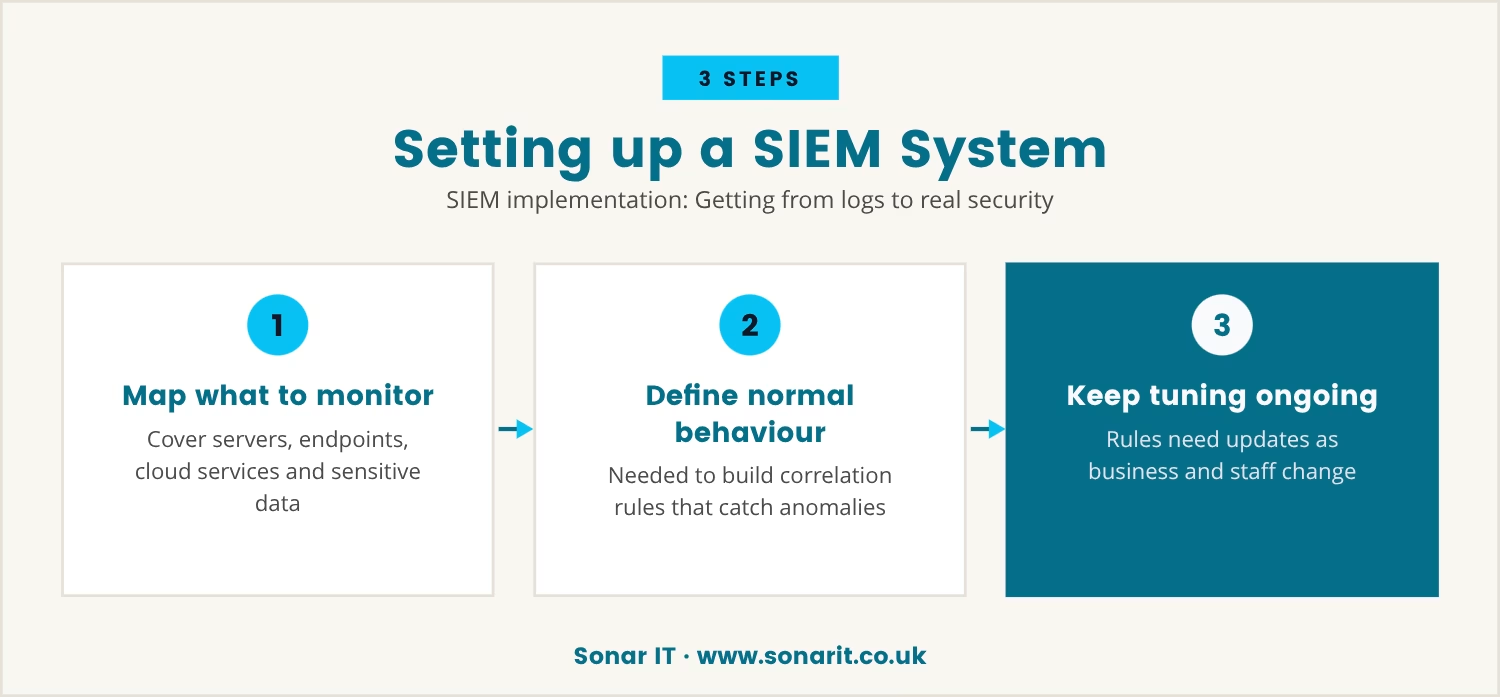
Setting up a SIEM system is a project, not a one-off purchase, and the work doesn't stop once the software's installed.
First comes mapping out what the SIEM will actually watch — servers, endpoints, cloud services, anything handling sensitive information.
From there, your security team needs to define what normal looks like for your business, because that's what lets you build correlation rules that catch the unusual without flagging routine operations.
After that initial setup, tuning never really stops. As the business changes — new software, new staff, a move to different offices — the rules and alerts have to be updated to keep working.
If you're not sure where to start, it's worth asking plainly: does your current SIEM platform actually help your team spot and respond to real threats, or is it just sitting there collecting data?
The benefits of a well-tuned SIEM solution
A SIEM system that's properly configured and kept up to date brings a handful of real advantages.
- Better threat detection: correlation rules surface attacks that would otherwise slip past unnoticed.
- Faster response: accurate alerts mean your team can act quickly when something's wrong.
- Reduced workload: filtering out the false positives frees your staff to focus on real issues.
- Improved compliance: meeting regulatory requirements gets easier once your SIEM supports timely incident response.
- Clearer visibility: you get a better read on your overall security posture and where it needs work.
Why SIEM tuning is essential for London businesses
For companies in London, the stakes run higher than in most places, because local regulations, industry standards, and the sheer pace of business mean a generic SIEM setup won't cut it.
A well-tuned SIEM system helps you keep pace with those pressures, feeding your security operations centre relevant, actionable alerts instead of burying it in noise.
Tuning your SIEM isn't only a technical step, either — we'd call it a business decision, one that protects your reputation, your clients and your bottom line.
The real cost of skipping SIEM tuning
Buying a SIEM tool without investing in correlation rules and alert tuning is a bit like paying for a security guard who never actually looks at the cameras — you've got the equipment, just not the protection.
The money spent on SIEM software is wasted if it can't flag real threats, and worse, you might not even realise you're exposed until something's already gone wrong.
A SIEM system only really earns its name once it helps you detect, understand, and respond to attacks, and that shift doesn't happen on its own — it takes planning, some expertise, and attention that doesn't stop after install day.

How Sonar IT helps you get real value from SIEM
If your business has 15 to 40 endpoints, you might already have a SIEM platform in place but still feel unsure whether it’s actually protecting you. At Sonar IT, we see many teams with the right software but without the tuned rules and alerts that make a difference.
We invite you to see how our approach focuses on building correlation rules and tuning alerts so your SIEM system truly helps you spot and respond to threats. Let’s talk about your current setup and what real security could look like for your business.
Ready to see your SIEM deliver real results?
Qualifying businesses can try our service with the first 30 days free and a £3,000 satisfaction guarantee—so you can see the value of a tuned SIEM with no risk.
[.c-button-wrap2][.c-button-main2]Start your free 30 days[.c-button-main2][.c-button-wrap2]
Frequently asked questions
How long does it take to see results after SIEM implementation?
Most businesses start pulling logs in as soon as the SIEM system goes in, but useful results depend on how fast you get correlation rules built and alerts tuned — for a typical setup that's often several weeks before the alerts are genuinely actionable. From there, expect ongoing adjustments as your environment keeps changing.
Can a SIEM tool replace other security solutions?
A SIEM tool sits at the centre of your security operations, but it doesn't replace firewalls, antivirus, or endpoint protection. It works alongside them, pulling together data from across your systems so you catch what individual tools might miss on their own.
What are the main components of a SIEM solution?
A SIEM solution typically covers log collection, event correlation, alerting, monitoring dashboards, and reporting. Some modern SIEM platforms add automation and integration with other tools, though all of it still depends on proper configuration to actually work.
How does SIEM work with a security operations centre?
A SIEM system gives the security operations centre (SOC) one central view of everything happening across the business. That lets SOC analysts detect, investigate, and respond to incidents faster, because the noise has already been filtered out and the real threats are what's left standing.
Is SIEM suitable for smaller businesses with limited resources?
Yes — plenty of SIEM technologies these days are built to work for businesses with somewhere around 15 to 40 endpoints. The trick is keeping the focus on your most important data sources and starting with simple correlation rules and alerts, then expanding as your needs grow.





%20(1)%20(1).avif)


