.svg)
Importance of Network Segmentation for Security & Performance

Segmenting your network isn’t just a technical decision—it’s a business-critical one. As cyber threats grow more advanced, companies need smarter ways to protect sensitive data and maintain reliable systems. This blog breaks down the importance of network segmentation, how it supports network security and the benefits it brings to your operations. We’ll also explore different segmentation types, implementation strategies, and common challenges to avoid. Whether you're managing a virtual local area network or looking to improve your security posture, this guide will help you make informed decisions.
[.c-button-wrap2][.c-button-main2]Contact Us[.c-button-main2][.c-button-wrap2]
Understanding the importance of network segmentation
Network segmentation means dividing your computer network into smaller, isolated parts. This approach limits access between segments, making it harder for threats to spread across your entire system. It’s a key method to enhance security and improve performance across your infrastructure.
When you segment your network, you gain more control over who can access what. This is especially useful for protecting sensitive data, managing internal network traffic, and maintaining compliance with regulations. It also helps reduce network congestion by keeping traffic local to each segment.

Strategies to strengthen your network security through segmentation
There are several ways to build a secure, segmented network. Below are key strategies that help you get the most out of your segmentation approach.
Strategy #1: Define clear access rules
Start by setting rules for which users or devices can access each segment. This helps prevent unauthorised access and keeps critical systems isolated.
Strategy #2: Use firewalls between segments
Firewalls act as gatekeepers between network segments. They inspect traffic and block anything that doesn’t meet your security policies.
Strategy #3: Apply role-based access control
Limit access based on job roles. For example, your finance team doesn’t need access to engineering systems. This reduces risk if credentials are compromised.
Strategy #4: Monitor segmented traffic
Track the data moving between segments. Unusual patterns could signal a breach or misconfiguration that needs attention.
Strategy #5: Combine physical and logical segmentation
Use both hardware (like separate switches) and software (like VLANs) to create multiple layers of security. This makes it harder for attackers to move laterally.
Strategy #6: Regularly review segmentation policies
Networks change over time. Review your segmentation setup regularly to make sure it still meets your business and security needs.
Strategy #7: Plan for scalability
Design your segmentation with growth in mind. As your company expands, your network should be able to adapt without major rework.
Key benefits of network segmentation
Segmenting your network offers several practical advantages:
- Limits the spread of malware or unauthorised access across your systems
- Improves network performance by reducing unnecessary traffic
- Helps meet compliance requirements by isolating sensitive data
- Simplifies monitoring and troubleshooting within smaller segments
- Supports better control over network access and user permissions
- Enhances your overall security posture with layered defences
Exploring different types of network segmentation
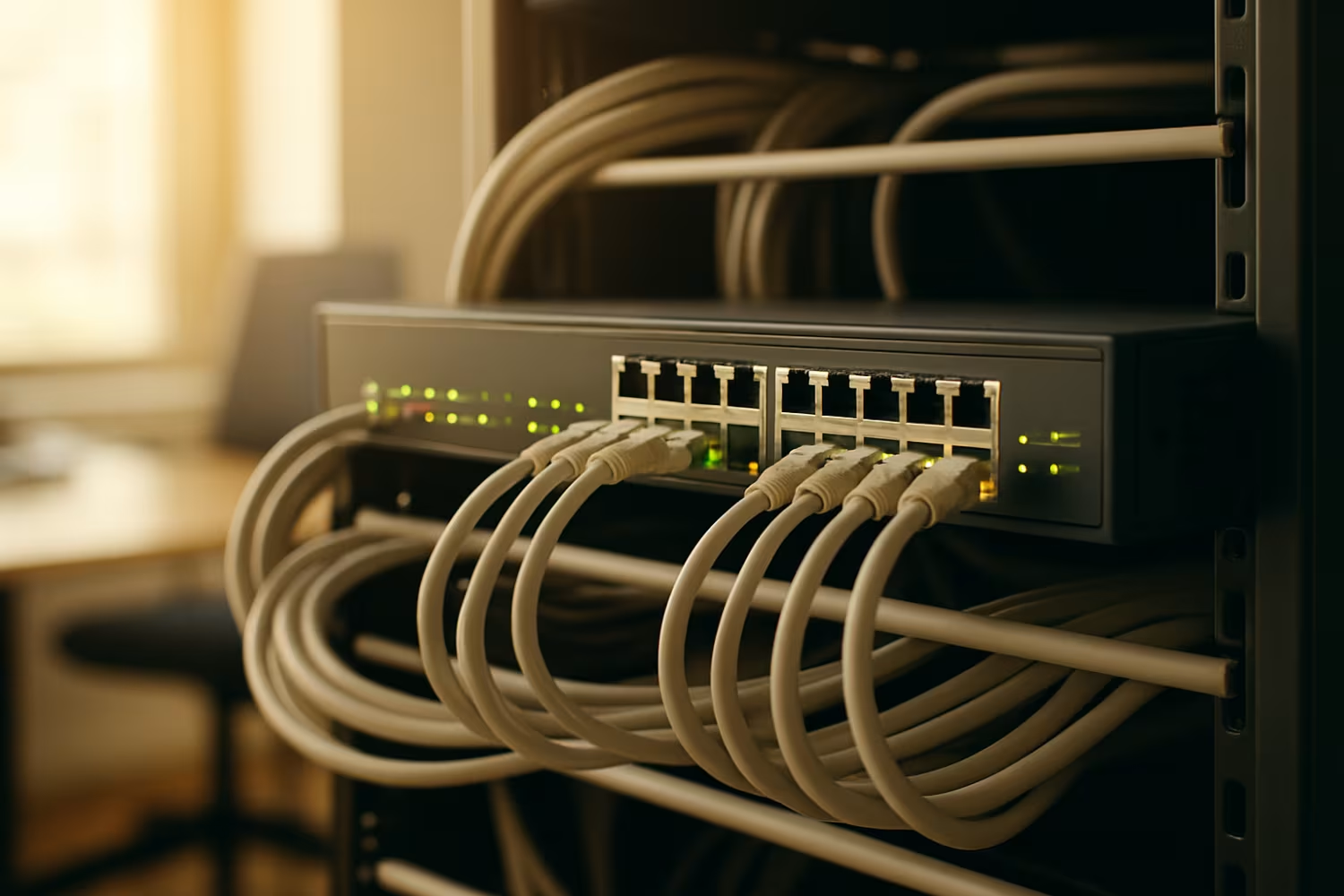
There are multiple ways to segment a network, each with its own use case. Logical segmentation uses software to divide networks, often through VLANs. Physical segmentation, on the other hand, involves using separate hardware like switches or routers.
Software-defined networking (SDN) is another method that allows dynamic control over how traffic flows across your network. This is useful in complex environments where flexibility is key. Choosing the right type depends on your business size, risk level, and technical resources.
How segmentation policies support data security
Segmentation policies define how your network is divided and who can access each part. These rules are crucial for protecting sensitive data and ensuring only authorised users reach critical systems.
For example, a policy might state that only HR staff can access payroll systems, or that guest devices are restricted to a separate local area network. These policies reduce the risk of internal threats and accidental data exposure. They also help enforce compliance with data protection laws.
Steps to implement logical segmentation effectively
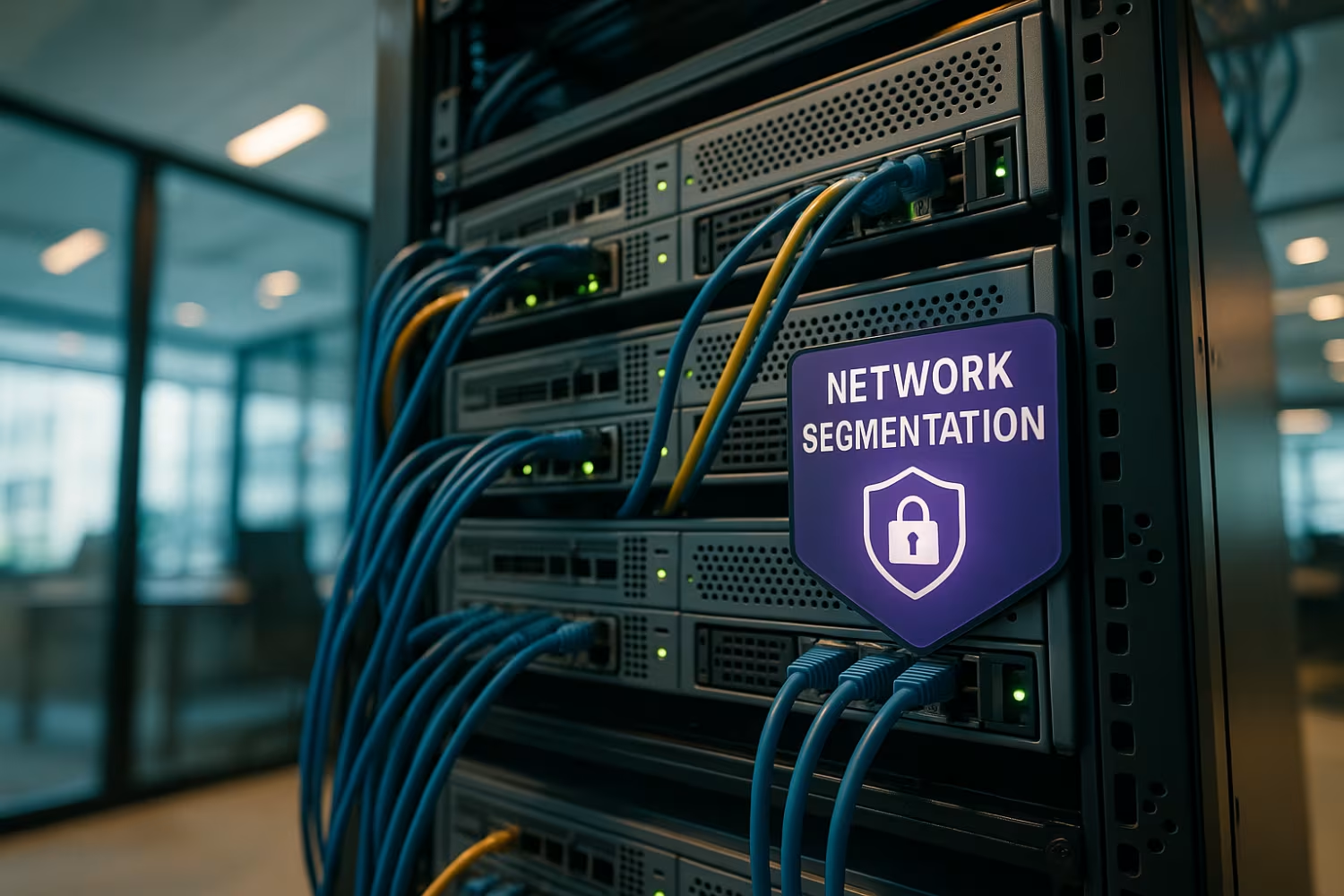
Logical segmentation is a flexible way to divide your network without needing extra hardware. Here’s how to do it right:
Step #1: Identify key assets
Start by mapping out your critical systems, such as databases, servers, and cloud services. These will form the core of your segments.
Step #2: Group users and devices
Organise users and devices based on function or department. This makes it easier to apply consistent access rules.
Step #3: Create VLANs
Use VLANs to separate traffic within the same physical network. Each VLAN acts like its own mini-network.
Step #4: Set up access control lists (ACLs)
ACLs define who can talk to whom across VLANs. This adds a layer of security by blocking unnecessary communication.
Step #5: Monitor and log activity
Keep an eye on traffic between segments. Logs help you spot unusual behaviour and respond quickly to threats.
Step #6: Test and adjust
Run tests to make sure your segmentation works as planned. Adjust your setup based on performance and security feedback.
Practical considerations for netwok perimeter protection
Your network perimeter is the boundary between your internal systems and the outside world. Protecting this edge is vital, but it’s not enough on its own. Internal segmentation adds another layer of security by limiting what attackers can access if they get past the perimeter.
Use firewalls, intrusion detection systems, and secure gateways at the perimeter. Inside the network, apply segmentation to isolate systems and reduce the blast radius of any breach. This layered approach strengthens your overall defence.
Best practices for managing segmented networks
Managing a segmented network takes planning and regular upkeep. Here are some best practices:
- Document your segmentation layout and update it as your network evolves
- Use automation tools to enforce access rules consistently
- Train staff on security policies and how segmentation affects their access
- Schedule regular audits to check for misconfigurations or outdated rules
- Align segmentation with your business goals and compliance needs
- Keep your segmentation flexible to support future growth
A well-managed segmented network is easier to secure, scale, and troubleshoot.

How Sonar IT can help with the importance of network segmentation
Are you a business managing 15–40 endpoints and looking to improve your cybersecurity? If you're growing and need better control over your internal systems, network segmentation could be the right move.
At Sonar IT, we help businesses build secure, scalable networks that protect sensitive data and reduce risk. Our team can assess your current setup, design a segmentation strategy, and implement it with minimal disruption. Ready to take the next step?
[.c-button-wrap2][.c-button-main2]Contact Us[.c-button-main2][.c-button-wrap2]
Frequently asked questions
What are the main benefits of network segmentation for small businesses?
Network segmentation helps small businesses by improving network performance and reducing the risk of cyber threats. It keeps sensitive systems isolated, so if one part is compromised, the rest stays safe.
It also supports better security policies and makes it easier to manage access. By dividing your network into smaller parts, you can control traffic and reduce the impact of malware or unauthorised access.
How do different types of network segmentation work?
There are several types of network segmentation, including physical segmentation and logical segmentation. Physical segmentation uses separate hardware, while logical segmentation uses software like VLANs.
Logical segmentation is more flexible and cost-effective for most businesses. It allows you to use network resources more efficiently while still maintaining a strong layer of security.
Why is network segmentation important for data security?
Network segmentation limits access to sensitive data by isolating it from general systems. This reduces the risk of data breaches and helps meet compliance standards.
It also supports a stronger security posture by preventing lateral movement during a cyber attack. Segmenting your internal network ensures that even if one area is compromised, others remain protected.
What are some common network segmentation FAQs businesses have?
Many businesses ask how to segment their network, what tools to use, and how it affects performance. They also want to know how segmentation supports network security and compliance.
Using software-defined networking can simplify the process. It lets you manage segments dynamically and respond quickly to changes in your network environment.
What kind of businesses need network segmentation the most?
Any business handling sensitive data or managing multiple departments can benefit from segmentation. It’s especially useful for companies with remote teams or cloud-based systems.
Segmented networks help improve performance and reduce network congestion. They also make it easier to enforce access controls and monitor traffic.
How does network segmentation affect the network perimeter?
Segmentation strengthens your network perimeter by adding internal defences. Even if attackers breach the outer layer, they can’t easily move through a segmented network.
This layered approach helps enhance security and limit the damage of any breach. It also supports better use of firewalls and intrusion detection tools.
%2520(1).avif)

%20(1)%20(1).avif)


